











How I fell in love with basketball
I fell in love with basketball at age 13. I learned the game by playing street basketball. I played a lot. I worked on my skills alone, on a bent basketball rim outside in the cold, practising ball-handling, passing, blocking, dribbling and of course, shooting from outside.
I have been six feet seven inches tall since age 19, giving me a biological advantage for basketball: I looked the part. Equally important, I had the skills, both on and off the court, as well the tenacity to launch my first career as a professional basketball player.
In the 2012-13 NBA season, the star players were LeBron James, Kevin Durant and Kobe Bryant. Their talent got fans excited. The Toronto Raptors basketball team was launched in 1995; basketball fever was catching on in Canada, too.
My first setback, however, was being cut from my high school basketball team. My high school coach didn’t think I was good enough.
I persisted. I was resilient.
Now, I’m at Massey LLP, where I can create my “second act” while helping professional retired athletes create theirs. But this time, the Massey partners are cheering me on. My unique journey has fused my sports knowledge with my legal knowledge to help address the problems many professional athletes face after retirement.
Doubling down after setbacks
I applied to Humber College, enrolling in a business marketing diploma in 2011. I competed with 125 other tryout candidates. I was the only player selected to join the Humber Hawks basketball team. Like my high school coach, my Humber basketball coach doubted my potential, too. I didn’t play much during games and was not given opportunities to showcase my basketball talent on the court.
I handled that setback by transferring to York University in 2013, where I had a banner first year with the York Lions basketball team, dominating the court as a power forward/centre while maintaining a high academic average. This qualified me for an academic scholarship. It was my breakout year. I was flying high!
I moved out of my parent’s house and signed a lease on my own apartment. Turned out that the lustre was short-lived. The York Lions basketball coach, after initially promising me an athletic scholarship, withdrew it without explanation. There was no appeal process.
Disappointed and frustrated, I soldiered on.
I transferred universities yet again, this time to the number one university basketball program in Canada at Carleton University in Ottawa, in 2015. I played for the Carleton Ravens. I won two national championships; I was named a two-time Academic All-Canadian. One award that meant a lot to me was being named an OUA All-Star. This award, given to the top Ontario players, cemented my rank as one of the top players in the province.
Lucky breaks don’t come with labels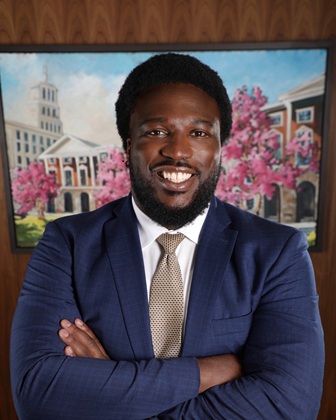
I had a mentor at Carleton University, a professor named Graham Smart, who helped me improve my writing, analytical thinking and overall academic performance. At the same time, I became involved in coaching youth with an interest in and an aptitude for basketball. One of these young lads was named Xavier.
One day, Xavier’s dad came over after the coaching session and introduced himself as Alex Jeglic, an Ottawa lawyer. He said he was very impressed by my interpersonal skills and the way I was coaching his son. He said I would make a good lawyer and asked if I’d ever considered law as a profession.
It started me thinking that eventually, even if I broke into the major basketball leagues, a career playing professional basketball would not last forever. Would law be my “second act”?
After graduating from Carleton University in 2017, I secured a position playing for the S.C. Lusitânia, a basketball team located in Portugal’s Azores. I was playing real basketball for real money. I counted my blessings: “How does a kid from Rexdale end up playing pro basketball in the paradise that is the Azores?”
A few months later, every pro basketball player’s nightmare afflicted me: during a game, I had the ball and I could not move. I freaked out! I had fractured my right knee and needed surgery. Because I was injured, I was let go from my contract.
Balancing basketball and law school
I returned to Canada in 2021 while awaiting surgery and got a job as a waiter at The Keg. I also wrote the LSAT. After my surgery and rehabilitation, I got another contract with a pro basketball team in Spain. I also received an acceptance letter from Osgoode Hall.
I did not want to give up either being a pro basketball player or becoming a lawyer. I spoke with Mya Rimon, the director of student programs at Osgoode Hall: “How could we make this work?” While I was still playing pro basketball. Full-time. On another continent. In another time zone.
The “deal” Ms. Rimon offered me was: 1) you can split your first year into two, and do your courses part-time and online (thanks, COVID-19!), and 2) then you have to become a full-time, on-campus student.
No one had ever asked for this type of accommodation from Osgoode Hall. Don’t ask? Don’t get!
I would take advantage of the daily siesta in Spain to do my coursework. I played the time zones. I also played pro basketball in Spain and Uruguay. I would do dozens of push-ups — part of my fitness routine — on the living room floor. My Spanish teammates thought I was “loco.” I preferred “bloodyminded.”
A sprawling betting scheme to rig National Collegiate Athletic Association (NCAA) and Chinese Basketball Association games ensnared 26 people, including more than a dozen college basketball players who tried to fix games in the 2024-25 season, U.S. federal prosecutors said in an Associated Press report from Jan. 15.
The fixers’ scheme grew to involve more than 39 players on more than 17 different NCAA Division I men’s basketball teams, who then rigged and attempted to rig more than 29 games, prosecutors said.
They bet millions of dollars, generating “substantial proceeds” for themselves, and paid hundreds of thousands of dollars to players in bribes, prosecutors said, with payments to players typically ranging from $10,000 to $30,000 per game.
The NCAA does not allow athletes or staff to bet on college games. Importantly, the NCAA feeds the National Basketball Association (NBA); the NCAA is where NBA scouts hang out.
What could make a young athlete with a promising career take such a risk that would destroy their future? Why is quick cash so appealing to college and professional players who seem to have it all?
The problems of professional athletes
Before I became a corporate and commercial lawyer, my first career was playing professional basketball at the collegiate level in Canada, and then at the professional level in Portugal, Spain, Asia and South America.
During that time, I learned a thing or three about professional basketball and by extension, other professional sports teams including hockey, baseball, football and soccer. I talked to many athletes and wanted to get to know them; it was my personal research project. I wanted to know what happens after their professional sports career ends.
Here’s some of what I saw first-hand:
Most professional athletes have no plan, which often leads them down a path of self-sabotage and self-destruction. It’s not one big mistake — it’s a slow leak. A few bad contracts. A few “sure thing” investments. The wrong people around you. No tax planning. No corporate structure. No strategy to make the money back legitimately. Then suddenly the money that looked endless — isn’t! It is not surprising that some professional athletes become ensnared in gambling, bribery and other shady dealings.
Here’s an extreme example: Sebastian Telfair, who once made $19 million in the NBA, found himself back in “the projects,” moving back in with his parents on Coney Island after a mix of life events, legal problems and financial pressures piled up.
When the professional sports career is over, so is the important structure of fitness training, daily practice and playing actual games. Startling factoid: many professional athletes are not good at managing their time. Without a strict schedule, that time gets chewed up with bad business decisions, lifestyle creep — and sometimes shady people.
Many professional athletes have no plan for their “second act.” The typical pro career is often only three to five years — painfully short. After their contract is not renewed, players might spend all day on social media, video games, gambling and partying.
About 60 per cent of NBA players go broke within five years of retirement; about 78 per cent of NFL players face bankruptcy or serious financial problems within two years of retirement.
That’s when it hit me: I am well-positioned to help professional athletes find their post-retirement careers. I am going to be the post-retirement lawyer for professional athletes, starting with pro basketball players. I will help steward professional athletes to their “second act.” And just as important, build the legal protections that will keep them from becoming the next cautionary tale.
What are the legal services that retired pro athletes need to find their “second act”?
First, I help professional athletes determine the roadmap including: a) What future do you want to build — and what structures must be put in place now? b) How should you protect your assets, brand and business reputation? c) How do you avoid predatory deals and risky investments that derail longterm wealth? And d) Who is on your team outside of sports?
Then, I provide advice on how to buy a business or franchise, including due diligence. If a retired pro athlete wants to start a business, I provide counsel on the most effective way to do that. Next, we discuss how to protect wealth while growing it.
I can also guide professional athletes looking for their “second act” if they want to get hired in broadcasting, coaching, public speaking or sponsorship and branding. Some retired pro athletes have created wealth through real estate; I can help them do that, too. Lastly, I can give them advice and counsel on how to manage their legal affairs and keep out of legal trouble.
ABOUT THE AUTHOR
Associate Ryan Ejim is a corporate/commercial lawyer at Massey LLP, serving businesses, with a focus on corporate governance and finance. A former professional basketball player himself, Ejim’s area of specialty is advising professional athletes how to build their “second act” — life, business, wealth and personal achievement after they retire from professional sports.
Any article or other information or content expressed or made available in this Section is that of the respective author(s) and not of the OBA.